

Online Instructional Technology Master’s Degree
Elevate Learning With Technology Enhanced Instruction
A Master of Science in Instructional Technology degree from Grand Canyon University focuses on the design, development and implementation of technology-based learning solutions. This graduate-level program aims to educate professionals who can create effective instructional materials and training programs using technology.
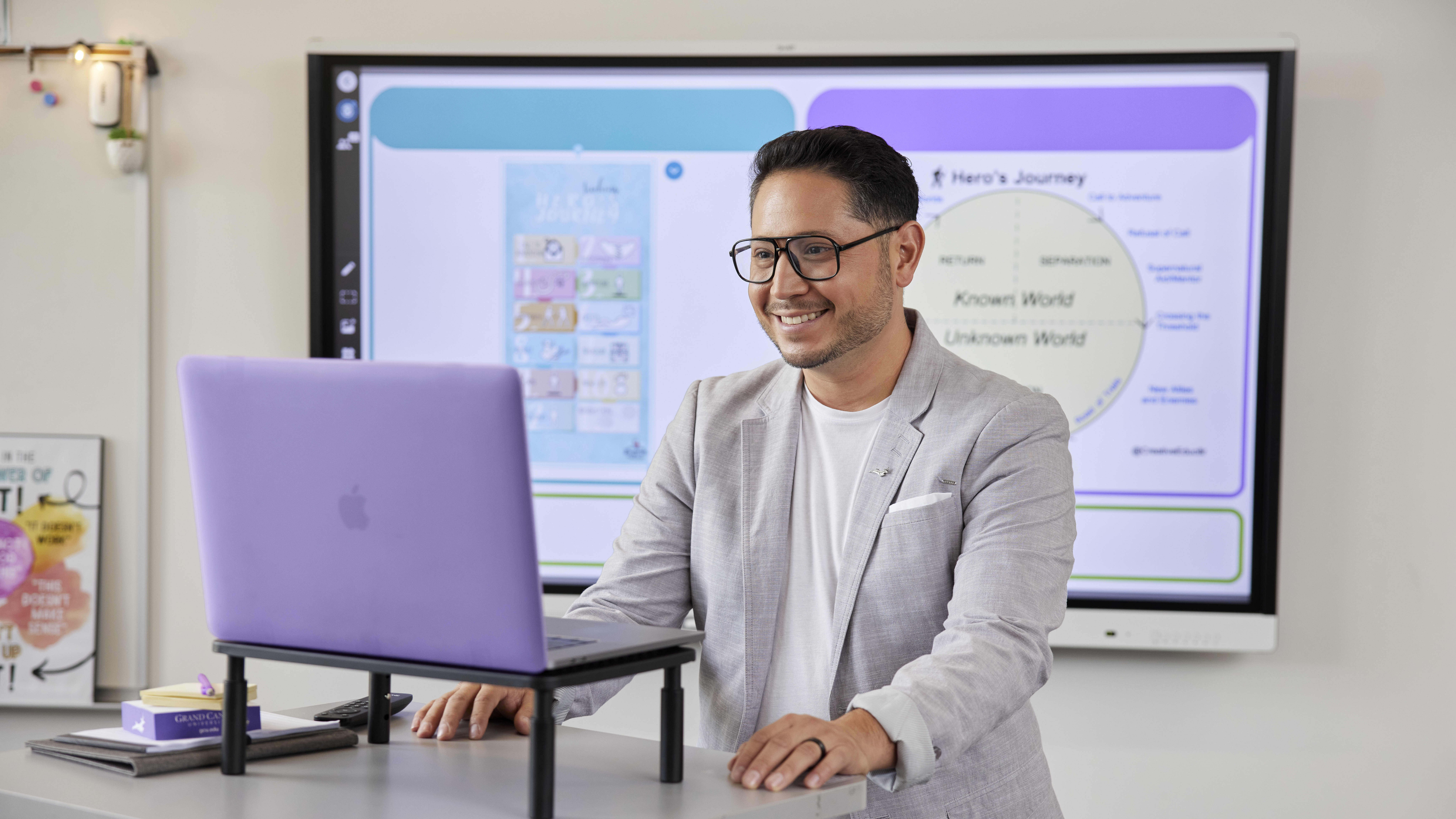
As a student, you are taught how to integrate technology into daily classroom work, as well as into teacher training. As a technology specialist in schools, graduates may lead the vision for how technology can be used in schools and help to make purchasing decisions based on those goals. In addition, you are prepared to support the day-to-day use and integration of technology in teaching and troubleshoot problems that may arise.
Tailored Program for Current Educators
This program is designed for professionals who already hold a teaching license. It may include many of the same courses as a licensure program but does not have the same student teaching or internship requirements. Overall, the program is a blend of knowledge with hands-on projects to position you for a STEM-based career.
Our master’s degree can prepare teaching professionals to increase their involvement with technology. Some graduates choose to remain in the classroom and more effectively incorporate technology into their teaching.
Loading Form
Digital Instruction Courses and Topics
A cornerstone of this master’s program is brain research about how technology connects to teaching, learning and memory. Graduates also learn about:
- Current practices and legal standards related to technology in schools
- Tech-based assessment systems
- Technology learning theories
- Multimedia teaching resources
- Curriculum development for distance education
- School-based technology and media leadership
Collaborate With Skilled Instructional Technology Educators
One of the best ways to gain insight and stay updated with the latest trends is to learn directly from technology industry instructors. The faculty at the College of Education have experience with:
- Technology-based instructional models
- Digital literacy methodology
- Technology integration
- Technology for assessment
- Multimedia instruction
- Distance learning
Furthermore, the master’s degree program culminates with the creation of a professional development portfolio, outlining the International Society for Technology in Education (ISTE) to demonstrate expertise in supporting technology within the educational environment. You will outline how you intend to integrate technology at your school site.
Career Paths for Graduates With an MS in Instructional Technology
This degree program from GCU is designed to prepare graduates to specialize in technology education leadership. With the knowledge and leadership skills embedded in the courses, graduates of this program may pursue careers including:
- Instructional coordinators
- Library specialists
- Development specialists
- Training and development specialists
Learn how to develop a tailored technology implementation plan in schools. Join other future technology specialists in the Master of Science in Instructional Technology degree program at GCU.
Earn Your Master’s From an Accredited University
Since 1968, GCU has maintained institutional accreditation from the Higher Learning Commission. Additionally, GCU is authorized by the Arizona State Board for Private Postsecondary Education. These accreditations highlight the university's commitment to quality education, with its academic programs meeting established criteria and standards recognized by peer institutions.
Instructional Technology Master’s FAQs
Whether you are a current educator or looking to transition into the field of instructional design, read through these common questions about pursuing this graduate-level degree.
Instructional technology in education refers to the use of technology tools, resources and strategies to enhance teaching and learning processes. This is a dynamic field that continues to evolve with advancements in technology, shaping the future of education by making learning more accessible, interactive and effective.
The time it takes to complete this master's program can vary depending on factors such as program structure, the number of classes you’re taking, individual circumstances and whether you bring in transfer credits. GCU is a transfer-friendly school. If you have credits from previous coursework or experience, you may be able to transfer them in, which can potentially speed up your completion time. Fill out the form on this page to speak to a university counselor to better understand how long it may take to earn your master’s in instructional technology degree.
As technology continues to transform the education landscape, an MS in Instructional Technology can equip educators with the necessary skills to create engaging and effective learning experiences using technology. Pursuing this degree can offer several benefits, including how to integrate cutting-edge technologies into your teaching practices, how to create engaging and dynamic learning experiences for your students, networking and developing a deeper understanding of how technology can enhance the learning experience.
Instructional design and instructional technology are related fields that are often used interchangeably, but they have distinct differences. Instructional design is the process of creating effective and efficient learning experiences by identifying learning needs, developing learning objectives, designing instructional materials and evaluating the effectiveness of the learning experience. Instructional technology, on the other hand, focuses on the selection, implementation and integration of various technologies to enhance the learning experience, specifically related to K-12 environments.
While instructional design may involve the use of technology, it also encompasses nontechnological approaches to create effective learning experiences. Instructional technology is primarily concerned with the use of technology to support learning.
The instructional technology field is diverse, with opportunities for professionals to work in various settings, such as K-12 education, higher education, government agencies, nonprofit organizations and corporate training. As an interdisciplinary field, skills such as instructional design, instructional technology, multimedia development and project management make this an engaging and dynamic field for professionals who enjoy continuous learning and growth. Furthermore, while the U.S. Bureau of Labor Statistics (BLS) does not provide specific job growth information for instructional technologists in particular, instructional coordinator is a common career path for aspiring instructional technology professionals. According to the BLS, 4,100 new jobs are estimated to open for instructional coordinators from 2023 to 2033.1
Take the next step in your professional journey and make a meaningful impact in instructional technology.
If you are seeking licensure/certification, please refer to the Accreditation and Compliance/State disclosures link for the specific program of interest’s website for your location and/or employment state licensure requirements, per 34 CFR 668.14(b)32 and 668.43(c).
1 COVID-19 has adversely affected the global economy and data from 2020 to 2023 may be atypical compared to prior years. Accordingly, data shown is effective September 2024, which can be found here: U.S. Bureau of Labor Statistics, Occupational Outlook Handbook Instructional Coordinators, retrieved on Aug. 30, 2024.
Core Courses
Course Description
This course is designed to prepare students for the graduate learning experience at Grand Canyon University. Students have opportunities to develop and strengthen the skills necessary to succeed as graduate students in the College of Education. Emphasis is placed on utilizing the tools for graduate success.
Course Description
This course focuses on brain research (from neuroscience to the behavioral and cognitive sciences) that relates to teaching and learning and suggests ways that brain research can be translated into instructional practices within organizational settings. Candidates will examine the inner workings of the brain and the effect on learning, memory, and transfer. Specifically, the course explores the body of knowledge that represents the application of brain research to instructional practice, and how knowledge about the human brain can affect the curricular, instructional, and assessment decisions that the candidates make every day. Practicum/field experience hours: None. Fingerprint clearance not required.
Course Description
This course provides an introduction to applied research in education across the major quantitative, qualitative, and action research traditions. Coursework focuses on understanding the research process and its integrated components to foster knowledge in navigating research reports and projects. Research designs and data analysis options are also explored.
Course Description
This course introduces students to the essential aspects of instructional technology: fundamental design principles and theories; technology standards for students, teachers, and coaches; artificial intelligence; digital responsibility; and legal and ethical guidelines. Students will engage with various asynchronous/synchronous instructional technologies related to authoring and delivery.
Course Description
This course examines the role of artificial intelligence in education, emphasizing its potential to enhance digital literacies and reshape teaching and learning. Students will explore how AI-generated content and tools can be leveraged to create personalized and engaging learning experiences. The course also addresses the ethical considerations of AI, promoting responsible and equitable use of AI technologies. Through authentic projects, candidates will gain practical experience in applying AI technologies to foster innovation in instruction and learning. Prerequisite: TEC-517.
Course Description
This course explores how to utilize technology to organize instructional planning and communication. Students will learn to use digital tools to efficiently organize both online and in-person classrooms. Additionally, this course prepares students to assist colleagues in identifying and managing digital resources effectively.
Course Description
This course examines a variety of technology tools that enhance both formative and summative assessments aligned with content standards. Candidates will evaluate educational technologies that accommodate learner variability, including tools that offer real-time feedback and adaptive features. Emphasis is placed on using data to drive instructional decisions and improve student outcomes. Candidates will also explore the role of assistive and adaptive technologies in supporting diverse learners, including students with exceptionalities, and integrate these tools into assessment and instruction. Prerequisite: TEC-532.
Course Description
This course empowers students to utilize multimedia instructional strategies based on key learning and design theories. By leveraging a variety of digital tools, students will create inclusive and engaging learning experiences. Students will develop technology-enhanced in-person and online instruction, aligned with content and technology standards.
Course Description
This course examines the complexities of creating and delivering instructional content for distance learning. Students will utilize a range of instructional technology tools to evaluate student technology literacy, promote collaboration, support asynchronous planning as a best practice, and ensure equitable access to digital resources. Practicum/field experience hours: 20. Fingerprint clearance required.
Course Description
This course is designed to empower students to take on formal and informal leadership roles in instructional technology-focused professional development. Participants will learn to conduct needs assessments, develop instructional technology professional development plans, and build collaborative coaching relationships. Emphasis is placed on evaluating professional practices and dispositions to create and sustain effective technology-enhanced instruction. Practicum/field experience hours: 20. Fingerprint clearance required. Prerequisite: TEC-543.
Course Description
This is the culminating course in the Master of Science in Instructional Technology program. Candidates will conduct a professional development needs assessment and create a year-long professional development plan to integrate technology in their school. Candidates will deliver, evaluate, revise a professional development presentation, and incorporate peer and faculty feedback to ensure timeliness and relevance, culminating in a digital portfolio. Practicum/field experience hours: 20. Fingerprint clearance required. Prerequisite: TEC-517, TEC-522, TEC-532, TEC-533, TEC-543, TEC-548, TEC-562.
- GCU cannot and will not promise job placement, a job, graduate school placement, transfer of GCU program credits to another institution, promotion, salary, or salary increase. Please see the Career Services Policy in the University Policy Handbook.
- Please note that this list may contain programs and courses not presently offered, as availability may vary depending on class size, enrollment and other contributing factors. If you are interested in a program or course listed herein please first contact your University Counselor for the most current information regarding availability.
- Please refer to the Academic Catalog for more information. Programs or courses subject to change

Pursue a next-generation education with an online degree from Grand Canyon University. Earn your degree with convenience and flexibility with online courses that let you study anytime, anywhere.